Sense the Sea: Multi-Sensory Maritime Communication Workshop
Join us for our workshop at the CommOcean Conference in Bergen!
Scientific communication about the sea is often based on data and graphs. On the other hand, for many, the sea is associated with careless leisure. Neither perspective brings reflection and awareness to the fact how the human body and life is dependent on it.
The workshop aims to bring a new approach to methods used in communicating ocean literacy as essential in everybody’s life. The goal is to re-experience the sea.
During the workshop, participants will be invited to engage through different senses – sight, smell, taste, hearing and touch. One of the elements will be a “water bar,” where they will taste water from different seas prepared in a lab. This will allow them to experience the differences in taste and composition of the water. They will learn about salt from different parts of the world.
The workshop will include audio sea recordings that will enhance emotional connection with water. Movement and body practices will help to recognize the human body as a form of life dependent on a motion of flow and will give a chance to experience water through touch and movement.
The workshops demonstrates that efficient communication requires awareness and understanding and so; to communicate successfully the sea, one must not only convey information but also develop mindfulness, and individual engagement. An approach that combines different senses allows people to build a deeper and more personal relationship with the sea and understand its importance in everyday life.
Workshop Moderators:
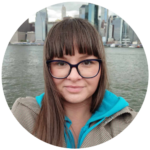
Izabela Kotyńska-Zielińska is a founder of the Today We Have, a coordinator of the I live by the SeaProject and an Ocean Literacy Educator and Comunicator. Izabela is an author and co-author of workshops, exhibitions and popular science events, which have been realized internationally, in e.g. New York, Brussels, Rostock, Lisbon, Paris, Crete and Warsaw, among others. Her work has
been presented at various international conferences.
She is and has been involved in many national and international projects Ocean of Changing, Ocean@Home, EARTHgames4EyoUth, SHORE, YOLA I live by the Sea Project, workshops for children and young people on the broadly understood marine environment, climate and arctic changes.
Izabela created the I Live by the Sea Project and has run it since 2015. Here goal is to educate kids and teenagers all over the world to realize that We all live by the Sea, no matter where we live next to the beach or far away in the mountains, we still have a great impact on it.
Her motto: You can never be overdressed or overeducated – Oscar Wilde
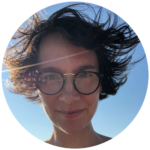
Ula Zerek a freelance creative producer, based in Gdańsk (Poland) a co-founder of polka dot foundation which creates spaces for interdisciplinary dialogue where art of dance and choreography can play a meaningful role and initiate real changes. Polka dot is one of partnering organisations leading NATURE OF US project since 2022. Since 2023 Zerek has run the Art Spaces – Dance program for the Urban Culture Institute in Gdańsk (Poland), organizing workshops, education programs, performances, publications, and conferences. She loves the Baltic Sea, interdisciplinary projects between culture, science, social life and creative business. She has an experience of over five years in theater production and management for young audiences at Miejski Teatr Miniatura in Gdańsk. She is also a choreographer and dancer working both in theatre and interdisciplinary contexts. She is a graduate of the University of Gdańsk and the Academy of Fine Arts in Gdańsk. Mom of Bolek, Teo and Rita.
 Date: September 3, 2026
 Time: 14:10 – 15:10 AM CET
 Location: Bergen, Norway
 Workshop Session 5 Room: SØNDRE ALLMENNING 1, UIB LEARNING ARENA SOUTH
Learn more about YOLA project HERE.
YOLA (Youth Ocean Leadership and Advocacy) is a dynamic initiative empowering young people (18-30 yo) to act for ocean conservation and climate policy. Co-funded by the Erasmus+ programme of the European Union, the project responds to some of the most urgent threats facing our ocean today — climate change, pollution, biodiversity loss, and ocean acidification.